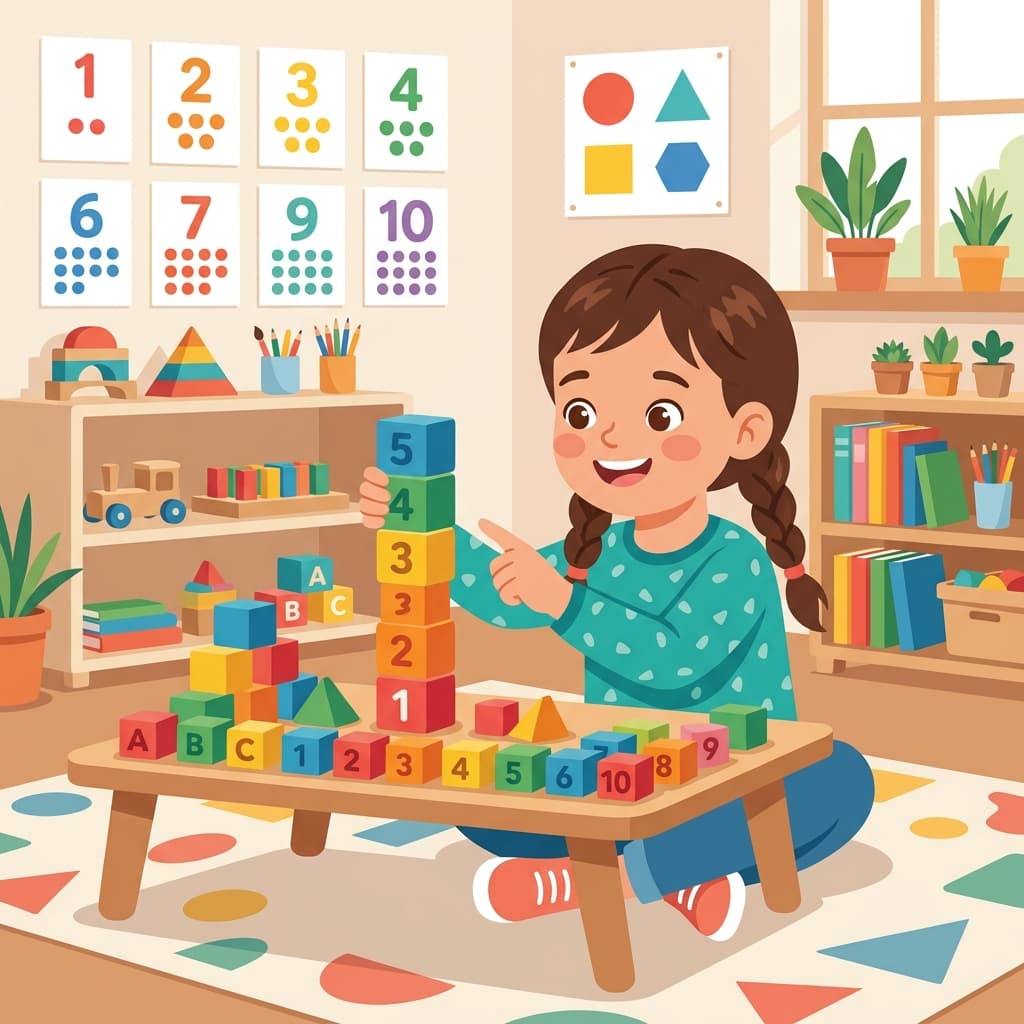
Pre-K Math Curriculum in North America: What Children Learn
Pre-K math is rarely called "math" at this age — and that is the point. Children in the year before kindergarten are building the number sense that everything else rests on, and they build it through play, not worksheets. Here is what children in Canadian and US pre-kindergarten programs are typically exposed to, and how you can support it at home without turning it into a drill.
Core concepts in Pre-K math
- Counting. Rote counting to 10, then 20. Learning that the number words come in a fixed order.
- One-to-one correspondence. Pointing to one object for each number said — the difference between chanting "1, 2, 3" and actually counting three blocks.
- Cardinality. Understanding that the last number said when counting tells you the total — a huge conceptual leap.
- Subitizing. Recognizing small quantities (1–5) instantly without counting.
- Comparing. More, less, same. Longer, shorter. Heavier, lighter.
- Shape recognition. Circle, square, triangle, rectangle. Sorting and grouping by shape.
- Patterns. Red-blue-red-blue. What comes next?
What parents can do at home
- Count everything — stairs, cheerios, crayons, steps on a walk.
- Ask comparison questions: "Who has more blocks, you or me?"
- Name shapes you see in the world. Find circles in the kitchen.
- Make simple patterns with beads, pasta, or stickers and ask what comes next.
- Read counting books. Sing counting songs. Five little ducks, ten in the bed.
What you do not need to do
You do not need to drill addition facts at this age. You do not need worksheets. You do not need flashcards. What children need at this stage is a lot of informal exposure to quantity and counting in daily life, so the concepts feel natural by the time they hit kindergarten. A child who leaves Pre-K knowing what "three" means — really knowing — is set up for success.
Ready to see adaptive math practice in action?
Start Free Trial